

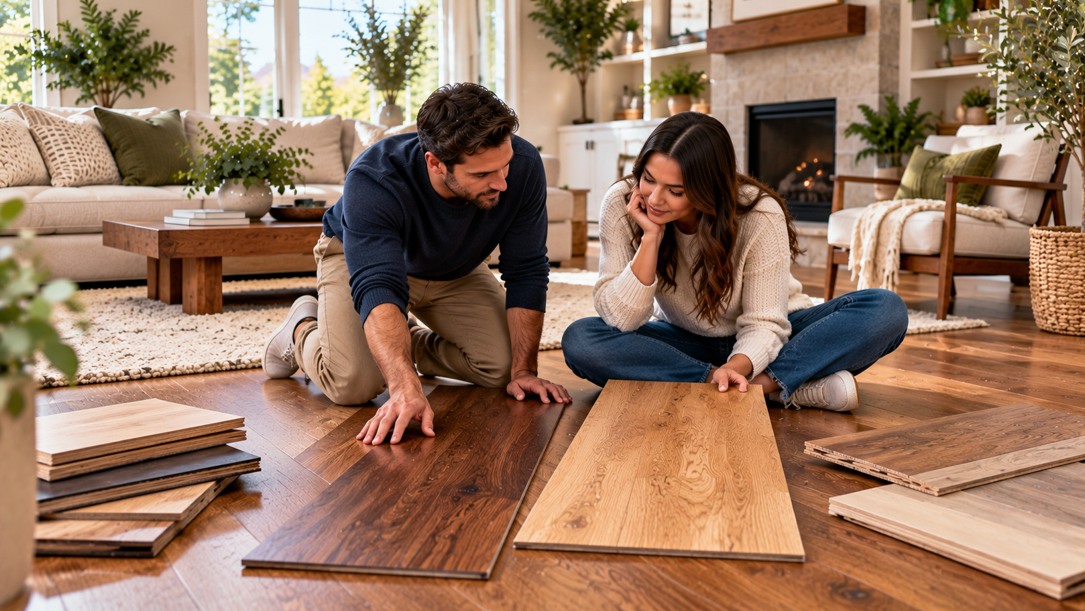
Milltown may be one of Middlesex County's smaller boroughs, but its homes are full of character, from older houses near the Mill Pond to well-kept Cape Cods and colonials on tree-lined streets. When Milltown homeowners shop for hardwood, they often discover a choice they had not considered: exotic or domestic wood? Both offer real hardwood beauty, but they differ in color, hardness, grain and price. At Carpets & More, our East Brunswick showroom carries both exotic and domestic hardwoods, and this guide explains how to choose between them.
What Are Domestic Hardwoods?
Domestic hardwoods grow in North America. They are the species most people picture when they think of wood floors.
Red oak: warm undertones, pronounced grain and a classic look found in many older Central Jersey homes.
White oak: a cooler, more neutral tone with tight grain. It is the most popular species in 2026.
Hickory: one of the hardest domestic woods, with bold color variation.
Maple: smooth, subtle grain and a light, clean appearance.
Walnut: rich chocolate tones and an upscale feel, though softer than oak.
Benefits of Domestic Hardwood
Widely available and often more budget friendly.
Easier to match with existing floors in older homes.
Takes stain well, giving you many color options.
Familiar performance, with decades of proven use in New Jersey homes.
What Are Exotic Hardwoods?
Exotic hardwoods come from regions such as South America, Africa and Asia. They are known for dramatic color and grain.
Brazilian cherry (Jatoba): deep reddish tones that darken beautifully over time.
Brazilian walnut (Ipe): extremely hard and dense, with rich brown color.
Tigerwood: bold, striped grain for a striking statement floor.
Santos mahogany: warm reddish-brown with a fine grain.
Acacia: dramatic color variation and a natural, rustic feel.
Benefits of Exotic Hardwood
Many exotic species are much harder than domestic oak, which helps resist dents.
Distinctive natural colors that do not require stain.
A unique, high-end look for living and dining rooms.
Comparing Hardness
Wood hardness is often measured on the Janka scale. Red oak, a common benchmark, rates around 1,290. Hickory comes in around 1,820. Brazilian cherry rates around 2,350, and Ipe can exceed 3,500. Harder woods resist dents from dropped items and pet claws, which matters in busy homes. Keep in mind that very hard woods can be more challenging to install and refinish.
Color and Light
Exotic woods often change color with exposure to light. Brazilian cherry, for example, darkens significantly over its first year. Domestic woods like white oak tend to stay more consistent. Think about how much sunlight your Milltown rooms receive and how you feel about color that evolves over time.
You can explore our selection of hardwood flooring online to compare exotic and domestic species.
Matching Older Homes
Many Milltown homes have original oak floors. If you are adding hardwood to match existing floors or extending flooring into a new addition, domestic oak is usually the easiest match. Exotic woods are better suited to rooms where you want a fresh, distinctive look.
Climate Considerations
Central Jersey's humid summers and dry winters affect all hardwood. Dense exotic woods can move differently than domestic species, so proper acclimation and indoor humidity control are important. Aim for 35 to 55 percent indoor humidity year-round, and allow new flooring to acclimate before installation.
Budget Considerations
Domestic species such as red and white oak generally offer the best value. Exotic species often cost more for materials and installation because of their density. That said, some exotic options are competitively priced, and our team will help you compare total project costs. Competitive financing is available.
Which Is Right for You?
Choose domestic hardwood if you want a classic look, an easy match to existing floors or the widest range of stain colors.
Choose exotic hardwood if you want a dramatic natural color, maximum hardness or a statement floor in a living or dining room.
Coordinating With Your Home
Carpets & More is a flooring and design center. Our team can help you coordinate new hardwood with cabinets, paint and window treatments, and we offer professional painting and kitchen and bath remodeling services.
Questions to Ask Before You Buy
Ask about the hardness rating, how the color will change over time and whether the species is available in solid or engineered construction. Ask how the wood handles humidity and what finish options are available. Our experienced sales advisers will walk you through every detail in a friendly, no-pressure way.
Certified Installation
Exotic woods in particular require skilled installation. Our certified installers handle subfloor preparation, acclimation and installation, and we stand behind our work.
Caring for Exotic and Domestic Floors
Care is similar for both. Sweep or vacuum regularly to remove grit, and use a damp microfiber mop with a cleaner made for hardwood. Add felt pads under furniture, and use rugs in high-traffic paths. Close blinds during the brightest hours to slow color change, especially with exotic species. Mats at every entry catch winter salt before it reaches the floor.
Solid or Engineered Construction
Both exotic and domestic species are available in solid and engineered construction. Engineered planks handle humidity swings better and can be installed in basements, while solid boards offer the most refinishing potential. Your choice of construction may matter as much as your choice of species, so we will help you compare both. Bring photos of your rooms and any existing floors you want to match, and our team will help you compare options side by side.
See Both in Person
Visit our showroom at 696 Route 18 North in East Brunswick, a few minutes from Milltown, to compare exotic and domestic hardwoods side by side, or book our Shop at Home service. We are here to help you choose the perfect hardwood for your Milltown home.


