

Why Surface Damage Happens in Laminate Floors
Laminate floors are known for their durability, but everyday life in a busy Manalapan home can still leave behind scratches, scuffs, and the occasional chip. Sliding furniture, excited pets, high-traffic hallways, or dropped household items can all create small marks that might stand out against an otherwise beautiful floor. While this type of wear is common, homeowners often don’t realize how straightforward it can be to restore laminate and keep a room looking polished. Early in that process, many local homeowners turn to Carpets & More, a trusted resource in flooring care and guidance across Central New Jersey. You can also explore what the store offers through Carpets & More to get a sense of the products and options available for your home.
Laminate flooring is built with protective layers designed to resist most everyday challenges, but even the strongest surface isn’t completely immune to signs of use. Fortunately, most minor damage can be handled with simple tools and a little patience.
Identifying the Type of Scratch or Chip
Before beginning any repair, it’s helpful to understand exactly what you’re working with. Not all scratches behave the same way, and each one benefits from a slightly different approach. Light surface marks often come from shoe soles, pet claws, or dragged decor. These usually sit on the topmost layer and are the easiest to repair. Deeper scratches tend to have more texture and may catch the light, making them more noticeable. Chips, on the other hand, reveal small dents or missing pieces in the laminate surface and require more targeted patching.
Identifying the severity early helps you choose the right fix and avoid unnecessary work. Knowing whether a mark is superficial or structural also keeps your flooring looking uniform once you begin restoring it. With laminate’s multi-layered construction, different levels of damage naturally call for different levels of care.
Repairing Light Surface Scratches
Light scratches rarely penetrate the protective coat on laminate flooring. These are usually the result of everyday living—perhaps a dining chair pulled back quickly or a child’s toy sliding across the room. Luckily, surface marks can often be handled using gentle cleaning solutions and simple homemade techniques.
Start by cleaning the area to remove dust or residue so you’re working on a clear surface. Then, use a laminate-safe scratch remover or apply a small amount of a repair compound designed for laminate surfaces. These products help fill shallow marks and restore the sheen of the surrounding area. When applying, focus on smoothing the material cleanly so the repair blends seamlessly. After it dries, buffing with a soft cloth brings back a refined finish that helps the scratch disappear into the surrounding pattern.
This approach works particularly well in living rooms, hallways, or playrooms where foot traffic creates occasional but manageable marks.
Repairing Medium to Deep Scratches
Deeper scratches—those that visibly break into the decorative layer—need more attention. These marks usually happen when heavier furniture is moved without protective pads, or when a sharp object contacts the surface at an angle. When a scratch reaches this level, the goal becomes restoring both the depth and the color of the affected area so it looks natural against the rest of the plank.
A laminate repair marker or crayon, matched closely to the floor’s tone, works well for achieving this. For deeper grooves, a putty-style laminate repair kit offers a better solution. These kits include blending materials that mimic wood tones and textures, allowing you to fill damage areas with more precision. Once the filler is applied and leveled, the color can be blended until the scratch becomes significantly less noticeable.
Because laminate floors come in many shades and finishes, it’s worth taking a moment to choose the right color before beginning. Small details like tone and sheen can make a big difference in achieving a professional-looking result.
Repairing Chips and Missing Pieces
When laminate flooring sustains a chip, the repair method becomes more detailed. Chips often leave behind a small cavity, exposing a layer beneath the decorative top. Although this damage might seem alarming at first glance, chips are very manageable with the right tools.
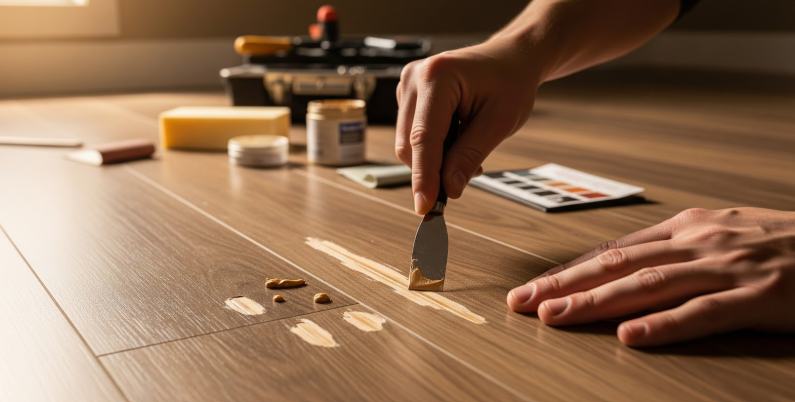
Laminate floor filler is specifically designed for these situations. It’s thicker than scratch compounds, making it suitable for rebuilding missing material. Begin by cleaning the chipped area, removing any loose fragments. Once clean, apply the filler with a small putty knife, smoothing it until it sits flush with the surrounding laminate surface. After shaping, allow it to dry before gently buffing away excess product. The goal is a smooth, even surface that blends well with the surrounding pattern.
Many filler kits come with tinting options that let you match your plank's color closely. This makes the final repair almost undetectable, especially in areas where you want your floor to maintain a polished, uniform look.
When to Replace a Plank Instead of Repairing
While laminate flooring is resilient, there are rare occasions when a plank is too damaged for small fixes. This often happens when large chips, deep gouges, or severe water exposure affect the integrity of the board. If the damage covers a wide area or interrupts the plank’s visual pattern significantly, replacing a single board may be the most effective approach.
Modern laminate flooring is installed using locking systems that make plank replacement much more accessible than many homeowners expect. In spaces like basements, entryways, or open-concept rooms in Manalapan homes, replacing a plank can restore the room’s appearance quickly and reliably. For anyone considering future upgrades, comparing materials helps in planning ahead. Some homeowners look into complementary surfaces such as laminate flooring when researching new options for similar areas in their home.
If you’re not comfortable removing or installing planks, the flooring team at Carpets & More can offer recommendations or help guide you toward the best long-term solution.
Preventing Future Scratches in Your Laminate Flooring
Once repairs are complete, a few simple habits can help preserve the look of your laminate floors. Furniture pads are an effortless way to protect your living room, dining room, or home office. A soft barrier between chair legs and laminate flooring helps reduce friction. Adding entry mats near doors also minimizes tracked-in debris that can leave marks behind.
Keeping floors clean with laminate-safe solutions reduces the wear caused by grit and everyday residue. For homes with pets, regular nail trimming can make a noticeable difference, especially in high-activity spaces. When moving large items, it’s helpful to lift or place protective blankets or sliders underneath.
Through a combination of small habits and routine cleaning, your laminate flooring maintains its long-lasting appeal, making it easier to keep scratches to a minimum.
Restoring Your Laminate Floors with Confidence
Repairing scratches and chips in laminate flooring is a simple way to restore the look of your space without major renovation work. With a few basic tools and the right techniques, homeowners in Manalapan can easily take care of everyday wear and bring back the beauty of their floors. When questions come up or you’d like guidance choosing the best repair materials, the knowledgeable team at Carpets & More is always ready to help. If you’d like more personalised support, feel free to reach out to us for friendly advice or assistance with your flooring project.


